

Essential Oils 101: A Complete Guide for Beginners
-
Aroma Purely
- Posted on
- 0 comments
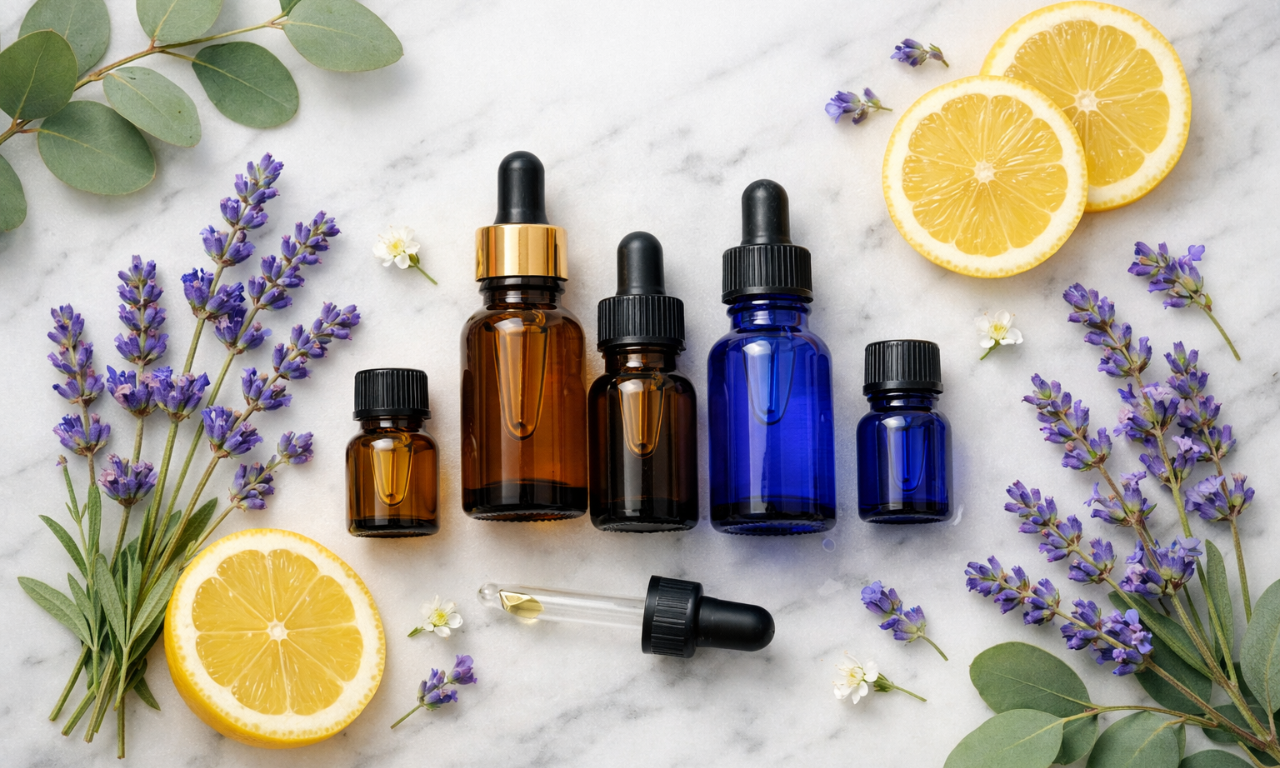
Are you curious about essential oils but don’t know where to start? You’re not alone. With so much information (and misinformation) out there, beginning your essential oil journey can feel overwhelming. This comprehensive guide will walk you through everything you need to know as a beginner, from understanding what essential oils are to using them safely and effectively in your daily life.
What Are Essential Oils?
Essential oils are highly concentrated plant extracts obtained from flowers, leaves, bark, stems, roots, or other parts of plants. These aromatic compounds capture the plant’s natural fragrance and beneficial properties, which is why they’re called the “essence” of the plant.
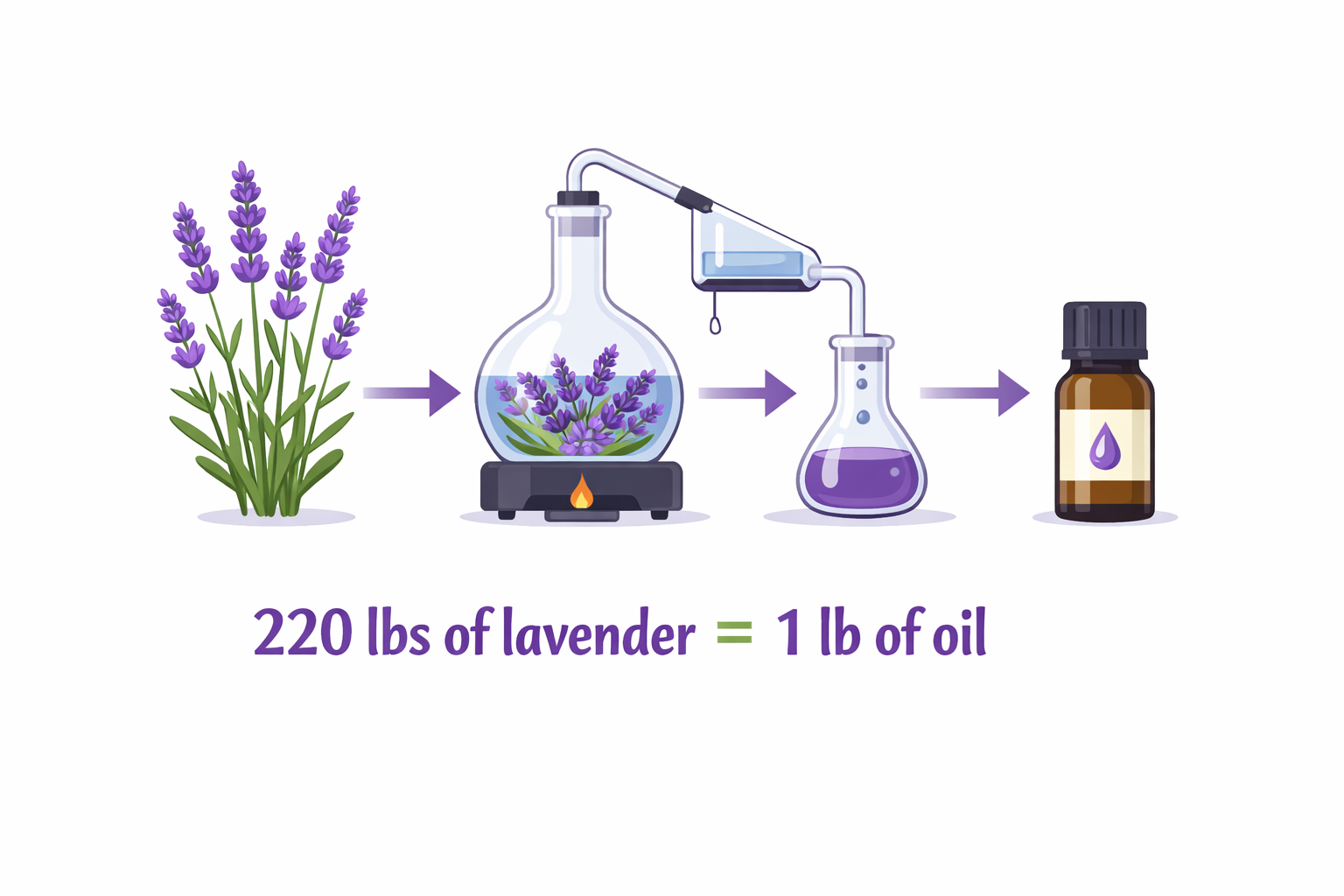
For example, it takes about 220 pounds of lavender flowers to produce just one pound of lavender essential oil. This concentration is what makes essential oils so potent and why they must be used carefully and correctly.
How Are Essential Oils Made?
Understanding the extraction process helps you appreciate the quality and value of pure essential oils:
Steam Distillation: The most common method where steam passes through plant material, capturing the essential oil vapors which are then condensed and collected.
Cold Pressing: Primarily used for citrus oils like lemon, orange, and grapefruit. The oil is mechanically pressed from the fruit’s rind.
CO2 Extraction: A modern method using carbon dioxide under high pressure to extract oils, resulting in very pure essential oils.
Solvent Extraction: Used for delicate flowers like jasmine. While effective, oils extracted this way are called “absolutes” rather than essential oils.
Top Benefits of Essential Oils
Essential oils offer a natural approach to wellness and can support your health in various ways:
Emotional Wellbeing: Many oils like lavender, bergamot, and ylang ylang can help promote relaxation, reduce stress, and improve mood through aromatherapy.
Physical Health Support: Certain oils possess properties that may support immune function, ease muscle discomfort, or promote respiratory health. For example, eucalyptus is commonly used for breathing support.
Natural Home Care: Essential oils make excellent natural alternatives to chemical-laden cleaning products, air fresheners, and personal care items.
Skin and Hair Care: When properly diluted, oils like tea tree, rosemary, and frankincense can be beneficial additions to your beauty routine.
Sleep Quality: Calming oils such as lavender, chamomile, and cedarwood are widely used to promote better sleep quality.
Essential Oils Every Beginner Should Know
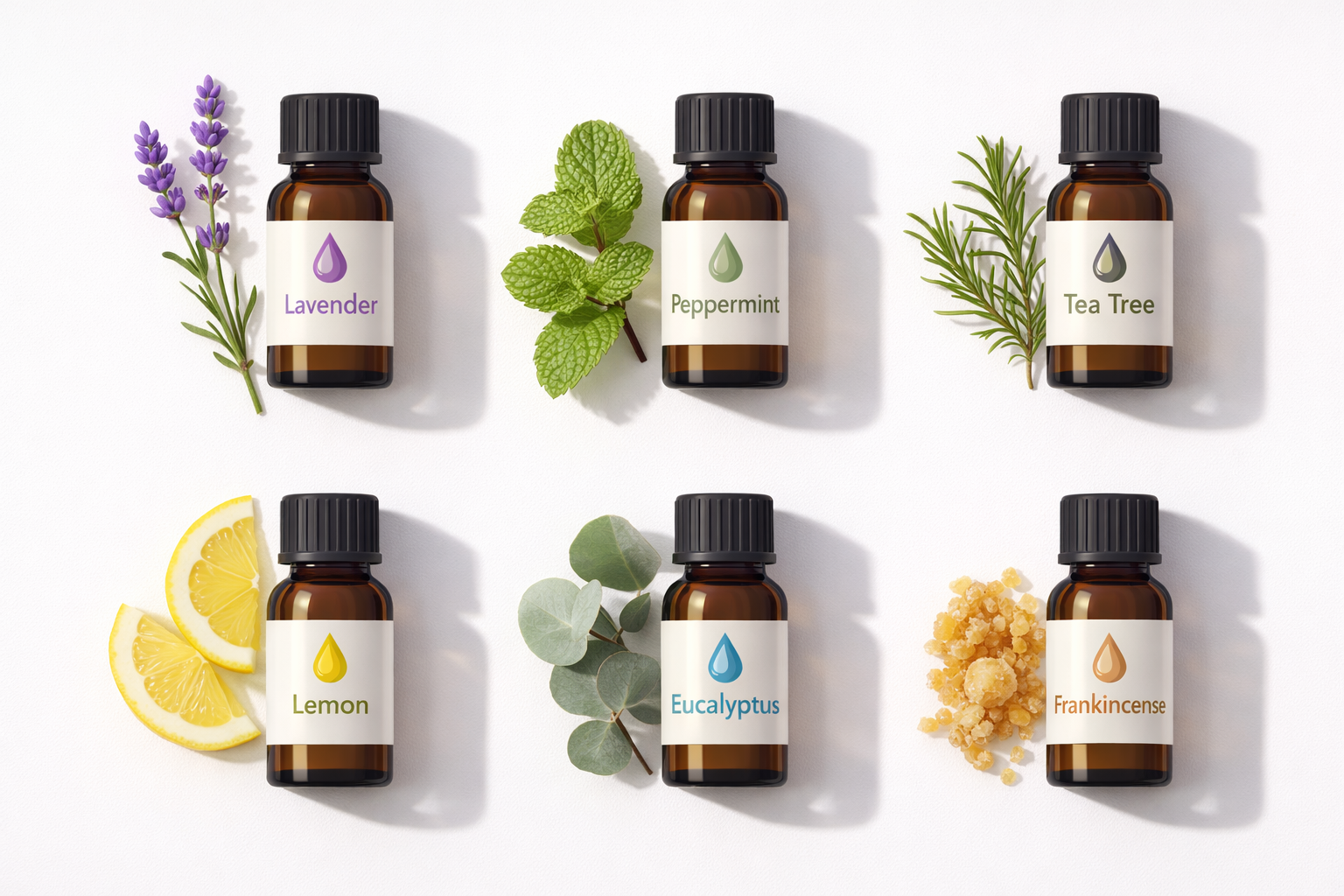
Starting with these versatile oils will give you a solid foundation:
Lavender: The most versatile oil. Great for relaxation, sleep support, minor skin irritations, and creating a calming atmosphere. This is often the first oil people purchase.
Peppermint: Energizing and cooling. Helpful for mental clarity, digestive comfort, and relieving tension headaches. Just a small amount goes a long way.
Tea Tree (Melaleuca): Known for its cleansing properties. Excellent for skin blemishes, natural cleaning products, and supporting healthy skin.
Lemon: Uplifting and purifying. Perfect for boosting mood, adding to cleaning solutions, and freshening the air. Note that citrus oils can be photosensitive.
Eucalyptus: Supports respiratory health and clear breathing. Wonderful in diffusers during cold season or added to shower steamers.
Frankincense: Often called the “king of oils.” Supports meditation practices, promotes healthy-looking skin, and offers grounding aromatherapy benefits.
How to Use Essential Oils Safely
Safety is paramount when working with these concentrated plant extracts. Here are the three main methods:
Aromatic Use (Inhalation)
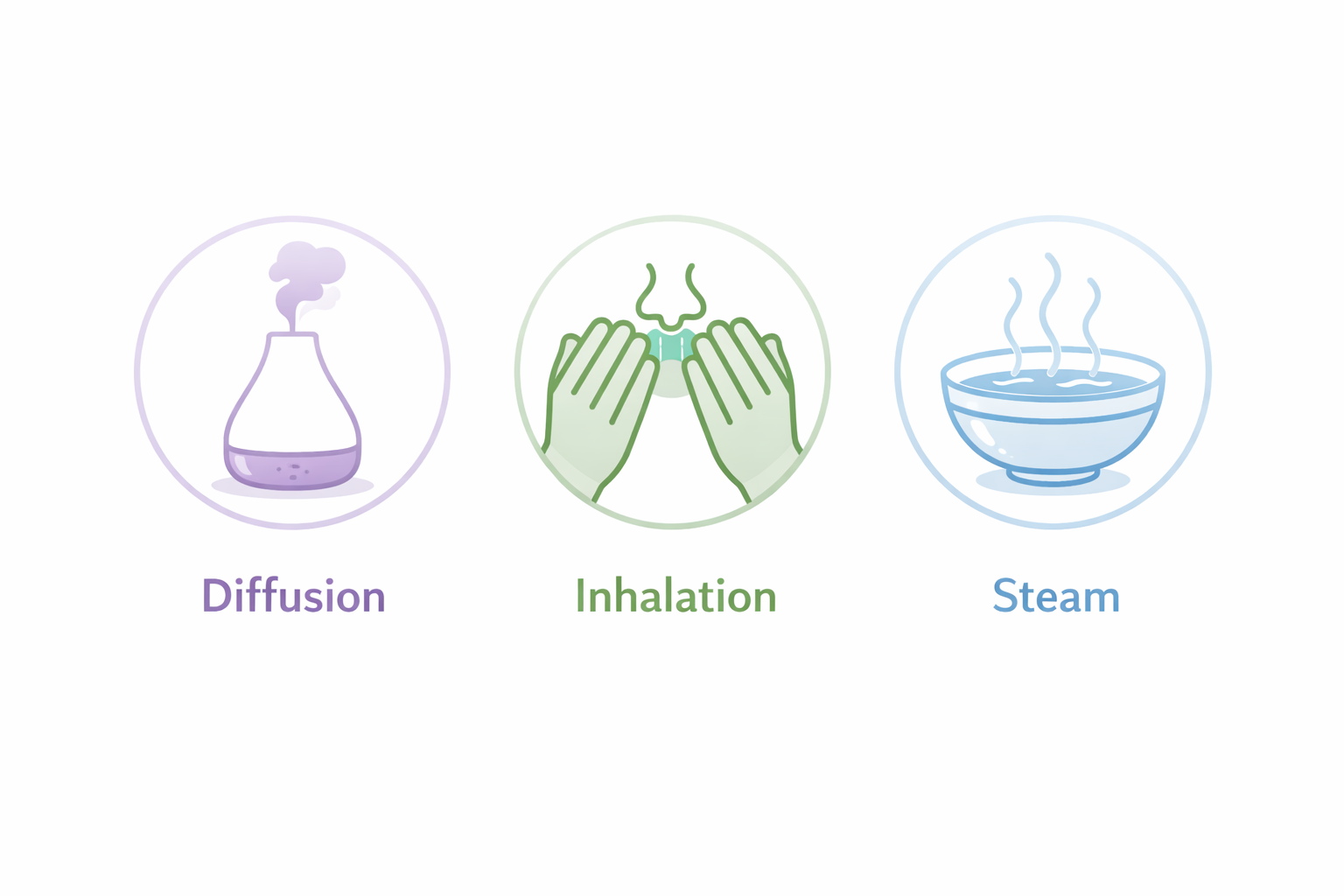
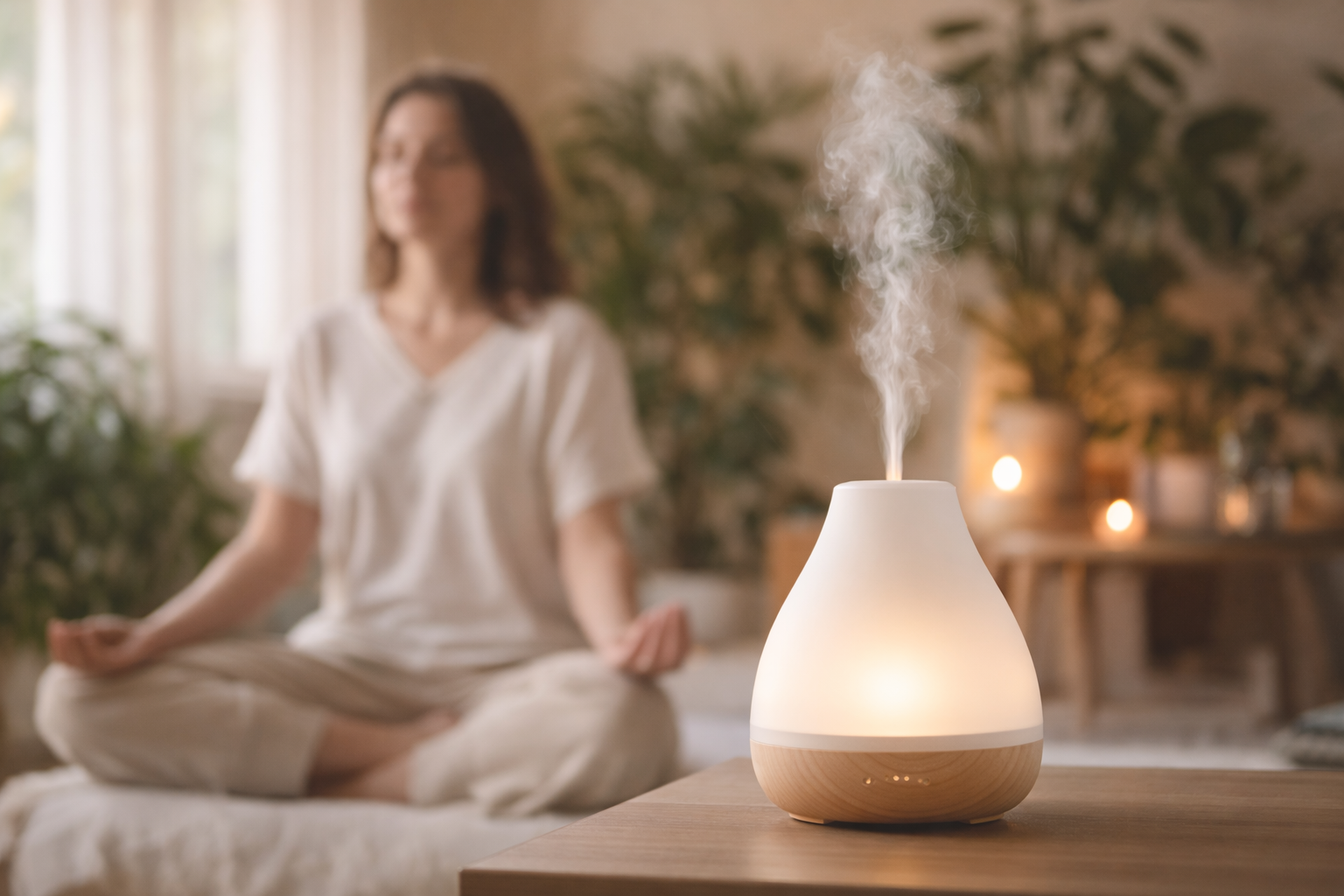
Diffusion: Add 3-5 drops to a diffuser with water. This disperses the oil into the air, allowing you to breathe in the aromatic benefits. Diffuse for 30-60 minutes, then take a break.
Direct Inhalation: Place 1-2 drops on a tissue or cotton ball and inhale deeply. You can also cup your hands over your nose (without touching) and breathe in.
Steam Inhalation: Add 1-2 drops to a bowl of hot water, place a towel over your head, and breathe deeply. Great for respiratory support.
Topical Application
Always dilute essential oils with a carrier oil before applying to skin. Carrier oils like coconut, jojoba, sweet almond, or grapeseed oil help spread the essential oil safely over a larger area.
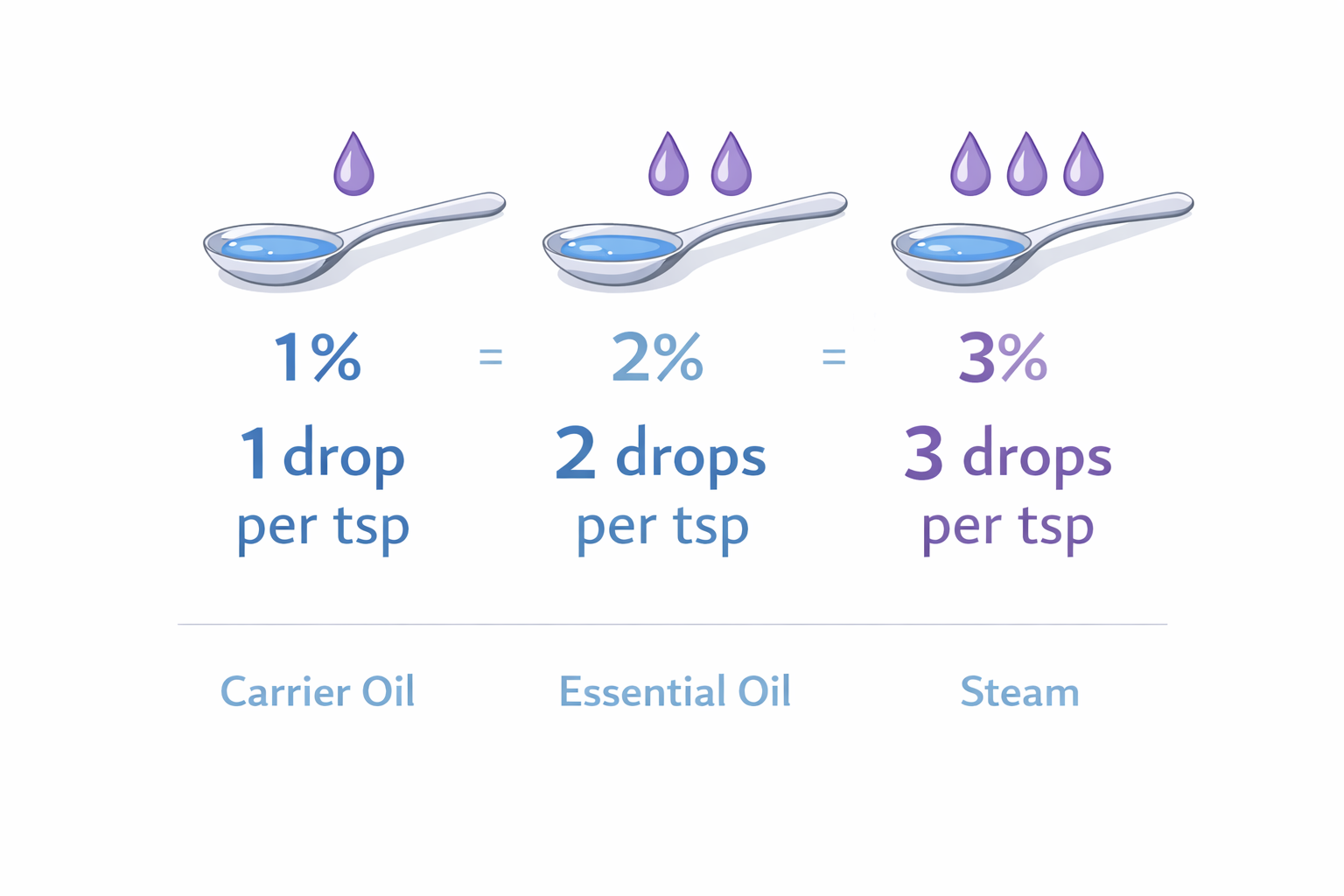
Dilution Guidelines:
- Adults: 2-3% dilution (2-3 drops essential oil per teaspoon of carrier oil)
- Children (2-10 years): 0.5-1% dilution
- Sensitive skin: 1% dilution
- Elderly or pregnant: Consult healthcare provider first
Patch Test: Always test a diluted oil on a small area of skin (like your inner forearm) and wait 24 hours before using more broadly.
Avoid Sensitive Areas: Never apply essential oils near eyes, inside ears, or on mucous membranes.
Internal Use
Important: Internal use of essential oils is controversial and should only be done under the guidance of a qualified aromatherapist or healthcare professional. Not all essential oils are safe for ingestion, and improper internal use can be dangerous. As a beginner, focus on aromatic and topical use.
What You Need to Get Started
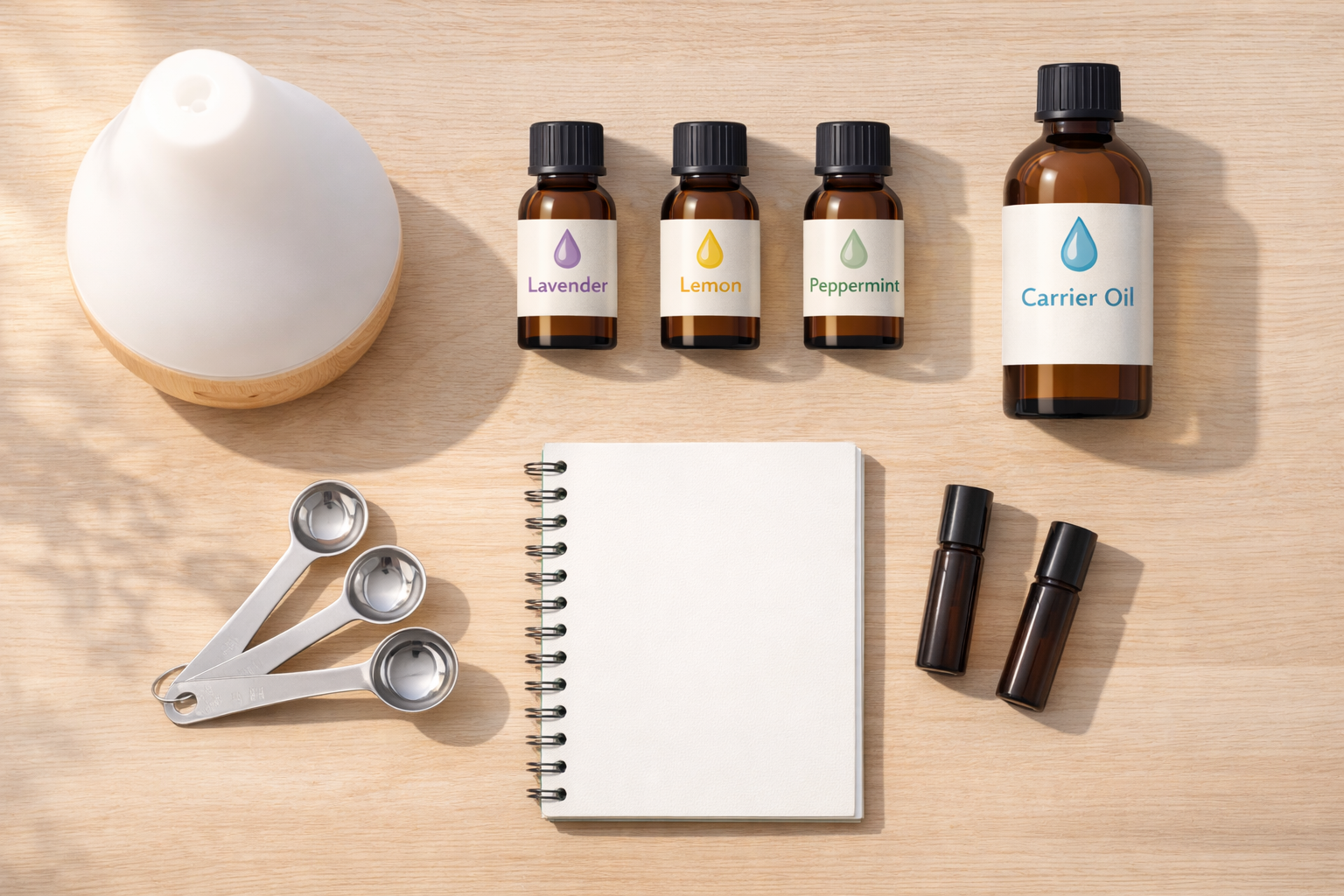
Building your essential oil toolkit doesn’t have to be expensive. Here’s what beginners should have:
Essential Items:
- 3-5 essential oils (start with lavender, peppermint, and lemon)
- A quality carrier oil (fractionated coconut or jojoba oil)
- A basic diffuser (ultrasonic diffusers are affordable and effective)
- Dark glass bottles for storing blends (amber or cobalt blue, 5-10ml)
- Small measuring spoons or droppers
Nice to Have:
- Roller bottles for personal blends
- A reference book or guide
- Additional carrier oils for variety
- Spray bottles for room sprays
How to Choose Quality Essential Oils
Not all essential oils are created equal. Here’s how to identify quality products:
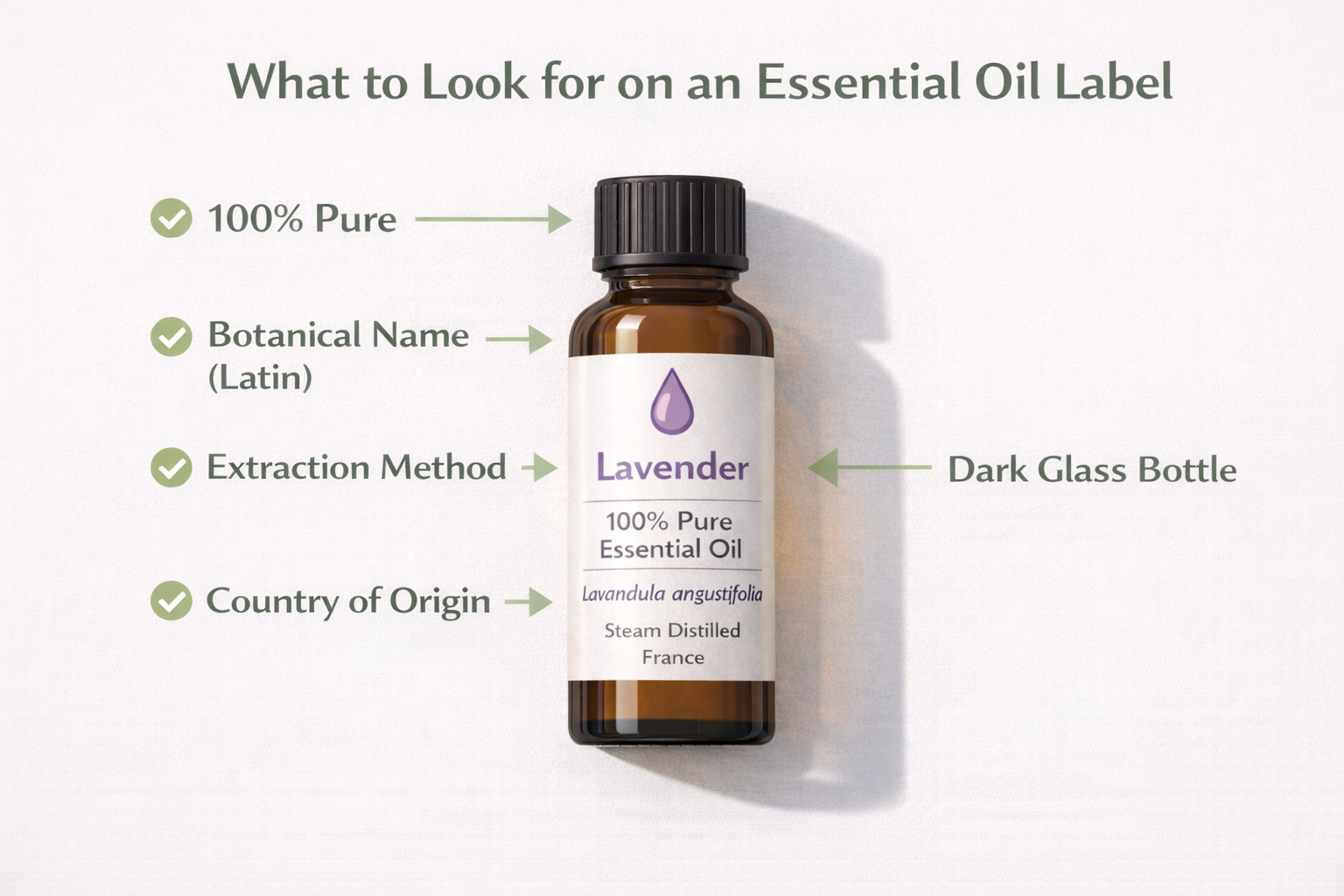
Look for Pure, Therapeutic-Grade Oils: The label should say “100% pure essential oil” with no added ingredients. Avoid oils labeled as “fragrance oil” or “perfume oil” as these are synthetic.
Check the Botanical Name: Quality brands list the Latin botanical name (e.g., Lavandula angustifolia for lavender) to ensure you’re getting the exact species.
Verify the Extraction Method: The label should indicate how the oil was extracted (steam distilled, cold-pressed, etc.).
Review the Country of Origin: Quality suppliers share where the plant was grown, as this affects oil quality.
Examine the Packaging: Essential oils should come in dark glass bottles (amber or cobalt blue) to protect from light degradation. Avoid plastic bottles.
Price Point: If a price seems too good to be true, it probably is. Pure essential oils require significant plant material and proper extraction, which costs money.
Reputable Brands: Research the company. Do they provide GC/MS testing reports? Are they transparent about their sourcing? Do they have good customer reviews?
Common Beginner Mistakes to Avoid
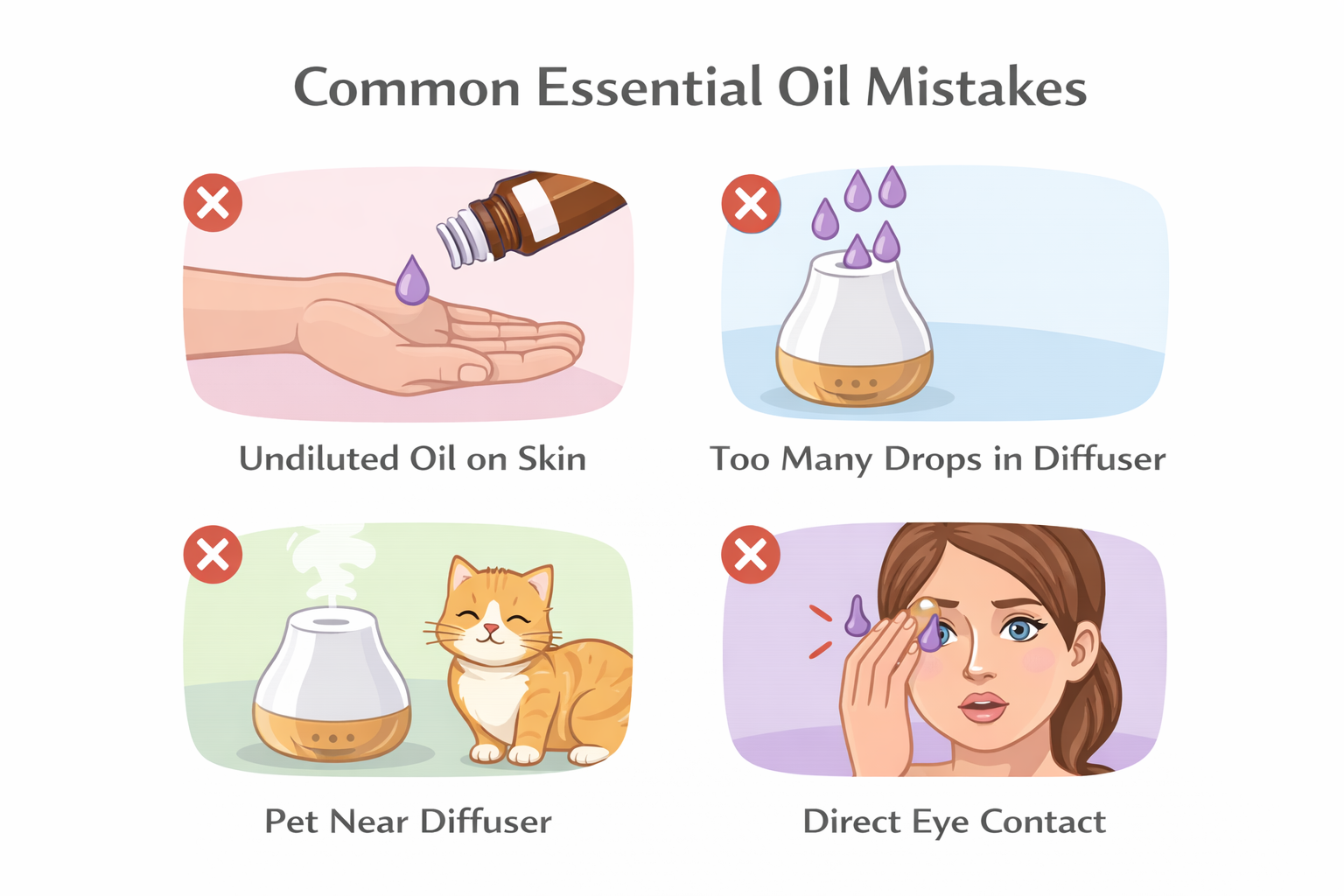
Learning from others’ mistakes can save you time, money, and potential health issues:
Using Oils Undiluted: This is the most common mistake. Always dilute for topical use unless specifically labeled as safe for “neat” application.
Using Too Much: More is not better with essential oils. Start with small amounts and increase gradually if needed.
Ignoring Allergies: Just because something is natural doesn’t mean it can’t cause allergic reactions. Always patch test new oils.
Using Wrong Oils Around Pets: Some essential oils are toxic to pets, especially cats and birds. Research pet safety before diffusing oils in your home.
Expecting Immediate Medical Results: Essential oils support wellness but are not medication. They shouldn’t replace proper medical care.
Not Researching Contraindications: Some oils shouldn’t be used during pregnancy, with certain medications, or with specific health conditions.
Buying Based on Price Alone: Cheap oils are often adulterated, synthetic, or of poor quality.
Simple Recipes to Start With
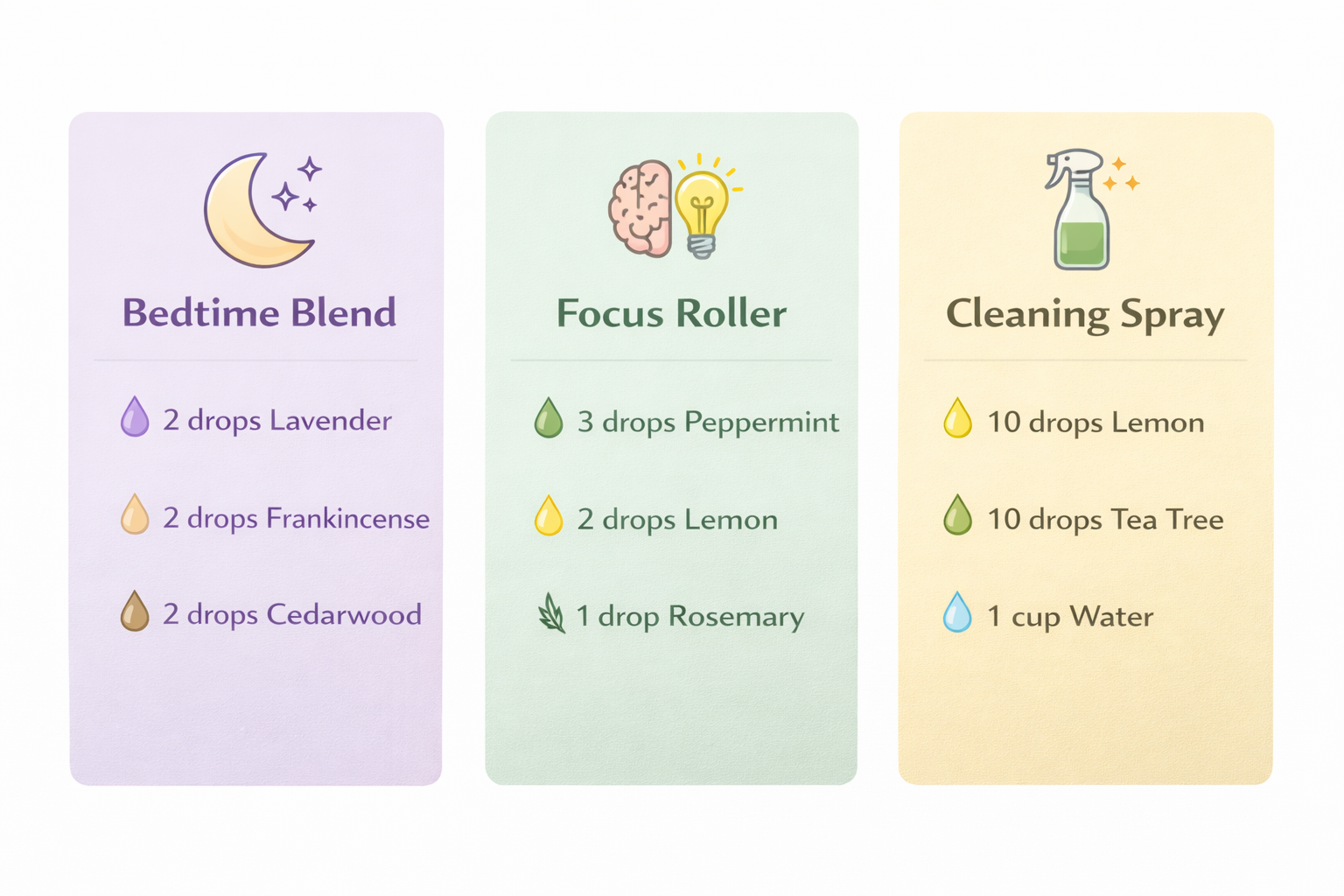
Here are three easy recipes for beginners:
Relaxing Bedtime Diffuser Blend
- 3 drops Lavender
- 2 drops Chamomile (or Cedarwood)
- 1 drop Orange
Add to diffuser 30 minutes before bedtime.
Focus and Energy Roller Blend
- 10ml roller bottle
- 5 drops Peppermint
- 3 drops Rosemary
- 2 drops Lemon
- Fill remainder with carrier oil
Roll on temples, back of neck, or wrists when you need mental clarity.
All-Purpose Cleaning Spray
- 16 oz spray bottle
- 1 cup water
- 1 cup white vinegar
- 10 drops Lemon essential oil
- 10 drops Tea Tree essential oil
Shake well before each use. Great for countertops and bathroom surfaces.
Storing Your Essential Oils Properly
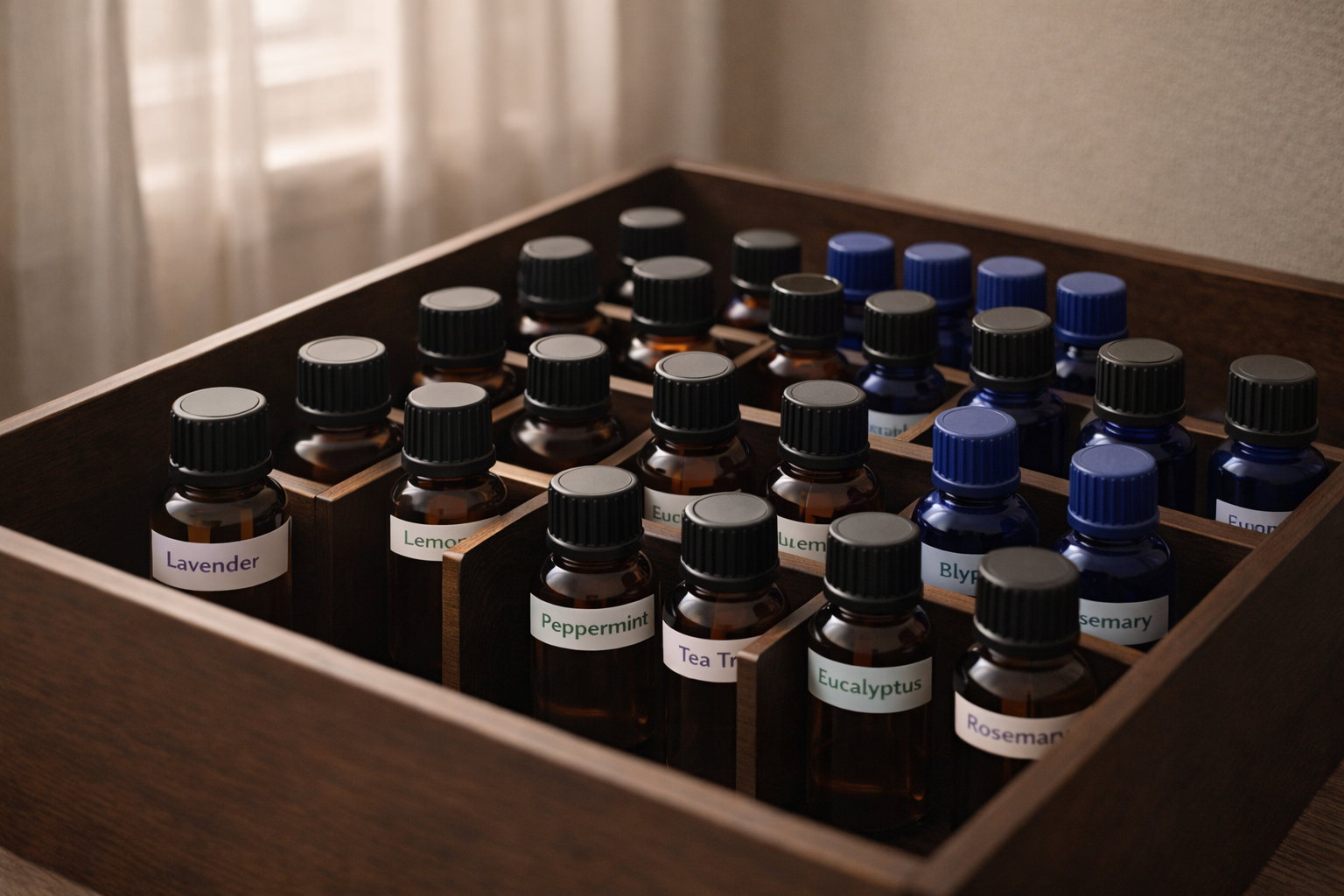
Proper storage extends the life of your oils and maintains their potency:
- Keep in dark glass bottles away from direct sunlight
- Store in a cool, dry place (not in bathroom humidity)
- Keep lids tightly closed to prevent oxidation
- Store away from children and pets
- Label clearly with name and date of purchase
- Most oils last 2-3 years when stored properly (citrus oils have shorter shelf life of 1-2 years)
Essential Oil Safety Rules
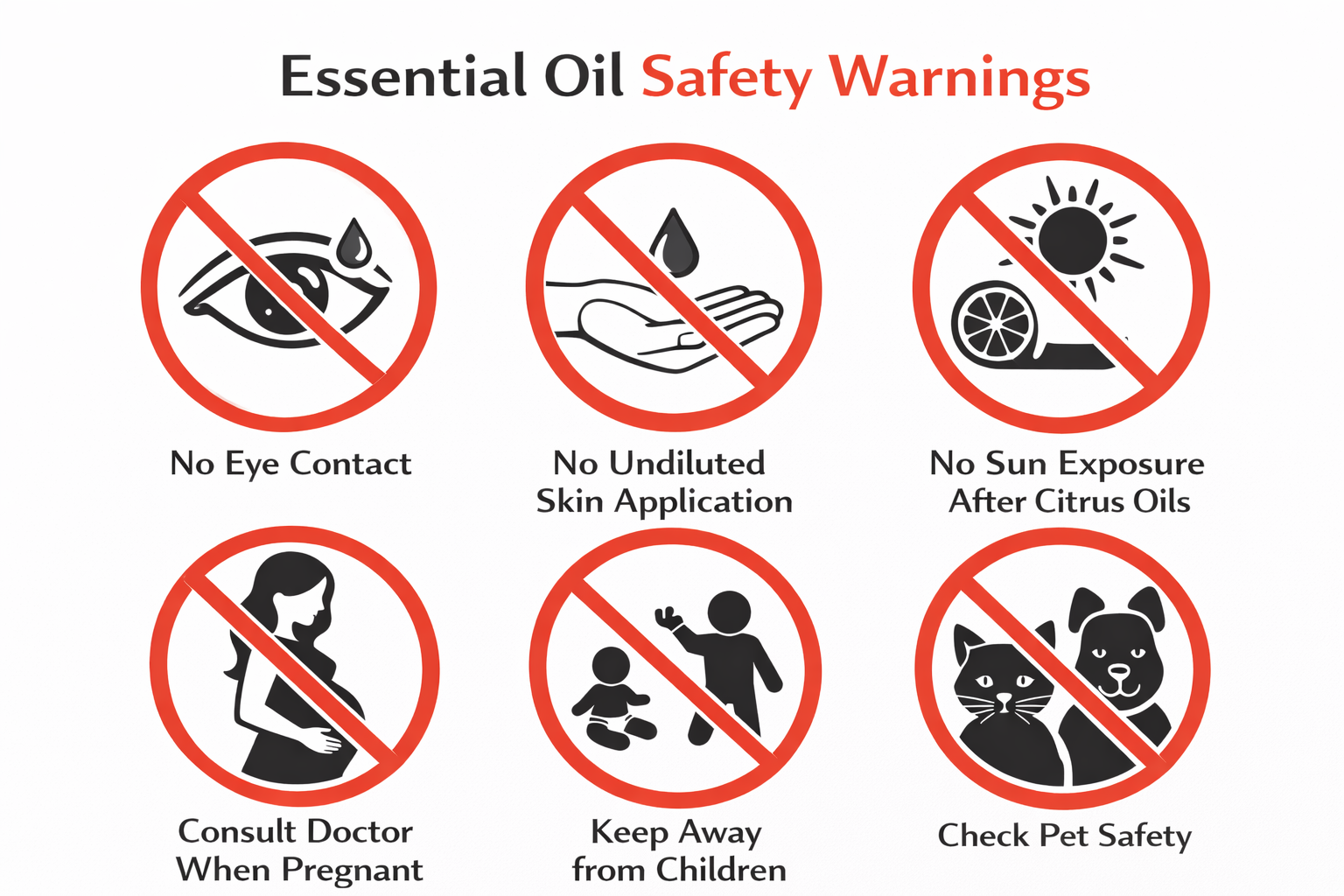
Always remember these critical safety guidelines:
Never apply undiluted oils directly to skin (with rare exceptions like lavender for minor burns, but even then dilution is often recommended).
Keep away from eyes and mucous membranes. If contact occurs, dilute with carrier oil (not water) and seek medical attention if irritation persists.
Photosensitive oils: Citrus oils can cause skin sensitivity to UV light. Avoid sun exposure for 12-24 hours after topical application.
Pregnancy and nursing: Consult with a healthcare provider before using essential oils, as some are contraindicated.
Children: Use extreme caution with children. Some oils are not safe for young children. Always use higher dilution rates and research child-safe oils.
Pets: Many oils are toxic to pets. Research thoroughly or consult a veterinarian before using oils around animals.
Medical conditions: If you have asthma, epilepsy, high blood pressure, or other health conditions, consult your healthcare provider before using essential oils.
Internal use: Do not ingest essential oils unless under professional guidance.
Frequently Asked Questions
Q: Are essential oils regulated? A: In most countries, essential oils are not strictly regulated as medicines. This is why choosing reputable brands and doing your research is crucial.
Q: Can I use essential oils if I’m pregnant? A: Some oils are considered safe during pregnancy while others are not. Always consult with your healthcare provider first. Generally, it’s recommended to avoid essential oils during the first trimester.
Q: How long do essential oils last? A: When stored properly, most essential oils last 2-3 years. Citrus oils have a shorter shelf life of about 1-2 years. If an oil smells off or has changed consistency, it’s time to replace it.
Q: Can I make my own essential oils at home? A: While you can make infused oils at home, true essential oils require specialized distillation equipment. Home extraction methods won’t produce the concentrated essential oils you can purchase.
Q: Are expensive oils always better? A: Not always, but extremely cheap oils are often adulterated or synthetic. Quality oils require significant plant material and proper extraction, which comes at a cost. Research the brand rather than just looking at price.
Q: Can essential oils expire or go bad? A: Yes, essential oils can oxidize over time, especially when exposed to air, light, and heat. Oxidized oils can cause skin irritation and are less effective.
Your Next Steps
Now that you understand the basics, here’s how to begin your essential oil journey:
- Start small: Purchase 2-3 versatile oils (lavender, peppermint, lemon) and a basic diffuser
- Invest in a carrier oil: Get a good quality carrier oil for safe dilution
- Research and learn: Read books, take online courses, or join essential oil communities
- Keep a journal: Track which oils you use, for what purpose, and how they work for you
- Practice safety: Always follow dilution guidelines and safety precautions
- Be patient: Results may take time. Essential oils support wellness gradually
- Expand gradually: Once comfortable with your starter oils, slowly add to your collection
Conclusion
Essential oils offer a wonderful way to support your natural wellness journey and create a more aromatic, toxin-free home environment. As a beginner, the most important things to remember are: always prioritize safety, start with quality oils, use proper dilution, and be patient with your learning process.
The world of essential oils is vast and exciting. Don’t feel pressured to learn everything at once or purchase every oil available. Build your knowledge and collection gradually, and most importantly, enjoy the experience of discovering these amazing plant extracts.
Remember, essential oils are complementary tools for wellness, not replacements for professional medical care. When used correctly and safely, they can be a valuable addition to your healthy lifestyle.
Ready to start your essential oil journey? Which oil will you try first? Share your thoughts in the comments below!
Disclaimer: This article is for educational purposes only and is not intended to diagnose, treat, cure, or prevent any disease. Always consult with a qualified healthcare professional before using essential oils, especially if you are pregnant, nursing, taking medications, or have a medical condition.